Chapter 16 of 18
The Road Home
June 30, 1865 to July 4, 1865
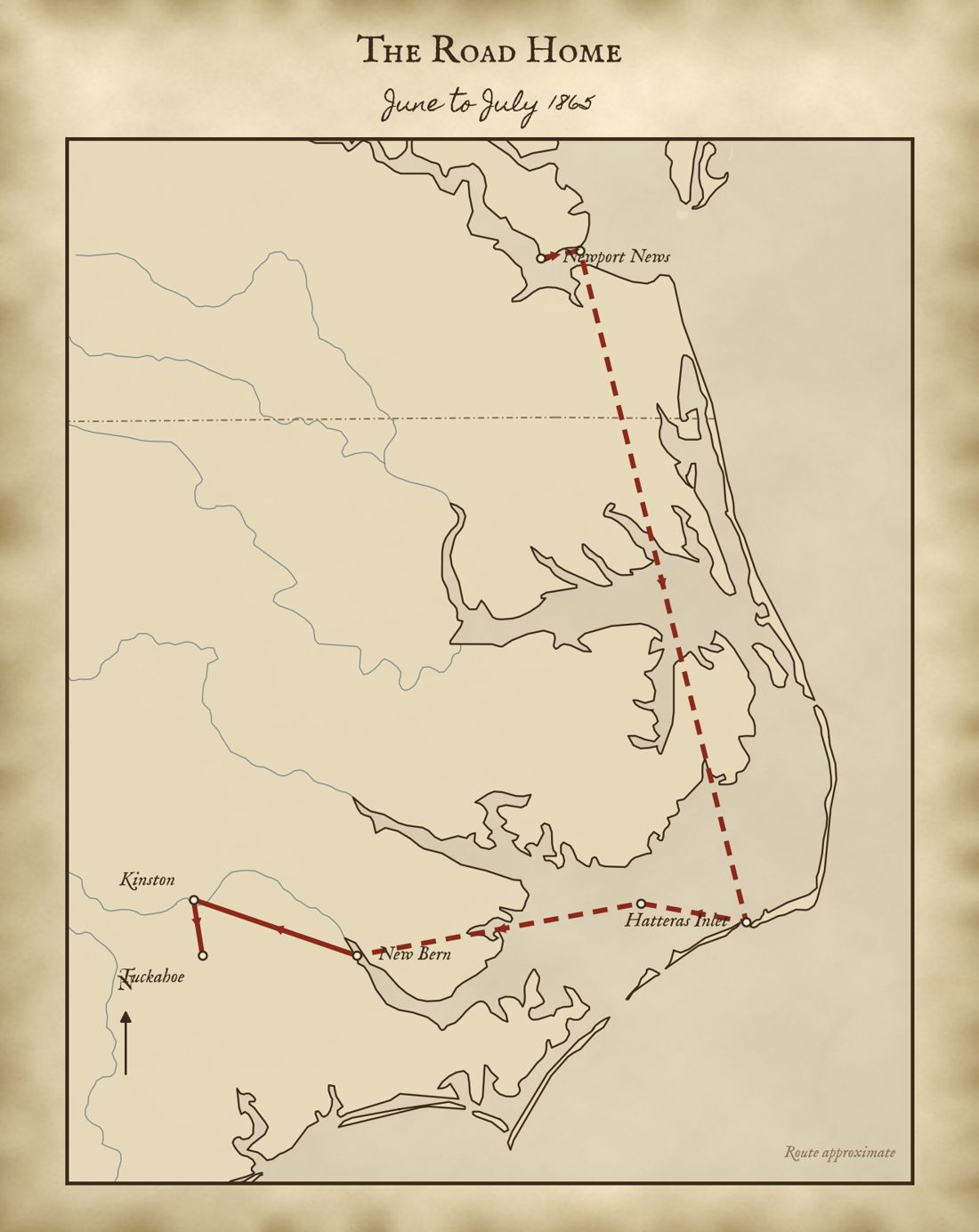
On the water
June 30, 1865
They loaded a crowd of us North Carolina men on a boat like so much freight. Sour air, men packed tight, the river stink and the sea wind fighting each other and both of ’em losing. Some got sick straight off and hung over the rail heaving up nothing, for there wasn’t nothing in ’em to bring up.
I sat with my back against a post holding my side. Every roll of that boat felt like it was tearing me open a little more.
Still, I watched the Virginia shore slip off behind us and I whispered, North Carolina, I’m coming.
New Bern
July 2, 1865
We landed at New Bern. Blue uniforms everywhere, cannon still looking out from the works, and the town half army post and half ghost. Three years ago I ran from this place in the fog. Now I walked into it with a paper in my pocket saying I could.
I figured I’d feel mad. Mostly I felt tired.
There were freedpeople on the streets, some watching us like we were a past they didn’t trust, and some just watching, the way folks watch a storm that’s done moved on. I kept my eyes in front of me. A Yankee checked my paper and waved me through like I wasn’t worth the trouble of hating no more.
That cut deeper than cussing would have.
The Kinston road
July 4, 1865
The railroad to Kinston is supposed to run. “Supposed to” is the most dangerous words in this new world. I waited a day and a night by the track and slept on the ground holding my side, and when nothing came I set out walking.
I caught a ride on a cart a ways and walked again. Younger men passed me without a word. I stopped at a farm and asked for water. The woman looked at me a long time, then brought a dipper and a piece of cornbread. She didn’t ask what side or what name. She just said, “You look like you’ve seen enough.”
I couldn’t answer her. My throat locked up.
I know the bends of this road. I know the kind of trees. But the land is changed. Fences broke down, fields gone to weeds, houses with patched roofs, and a quiet where there used to be the sound of work. A boy on a mule asked me was the war truly over. I told him yes. He asked had I saw his brother. I told him I didn’t know.
That’s the new kind of hurt the war left behind. The ones you carry for strangers.
Maps from the printed book